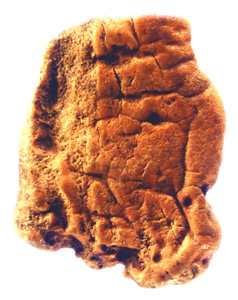
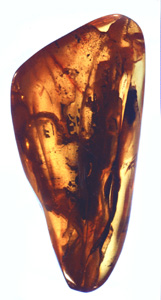
Scientific conference on the problem of amber in Poland took place in 1951 in the Museum of the Earth (Muzeum Ziemi). During this conference it was decided to creat a research centre of the Baltic amber in this institution. The problem was very important since during the war 1939-1945 all the amber collections in Poland were destroyed. Only a part of a small collection of the Department of Palaeontology of the Warsaw University was recovered from ruins by Professor Roman Kozłowski in 1945. Several month after this conference the amber collection in the Museum of the Earth consisted but of 19 samples, mainly the Quaternary deposits of the system of the Narew river. Because of further systematic purchases, exchanges and gifts the present amber collections of the Museum belong to the richest ones in the world. The most valuable are these containing animal inclusions (approx. 9000 amber pieces with numerous thousands of arthropod inclusions) and plant inclusions (nearly 2000 pieces of amber). There are numerous different varietes of amber and its natural forms of occurence (lumps, drops, "stalactites"). Moreover, the Amber Division of the Museum of the Earth contains collections of inorganic inclusions, amber handwares (prehistoric and folk hand-made articles, artists and factory products), amber-bearing deposits, fossil resins of different geological age and even amber imitations and counterfeits of organic inclusions. These rich amber collections represent very valuable scientific material, being used and examined by Polish and foreign research workers.
References |